
BLOG
The Underrated Digital Marketing Trick That Works Wonders: “Repurpose, Don’t Repeat
In the fast-moving world of digital marketing, it’s easy to feel like you’re on a never-ending treadmill of content creation. Every platform wants something different — Instagram Reels, LinkedIn posts, blog articles, YouTube videos, tweets, and so on. For most businesses, this constant demand can be exhausting, especially if you’re managing multiple channels.
What Does “Repurpose, Don’t Repeat” Mean?
Repurposing content means taking one strong piece of content and transforming it into different formats that suit different platforms and audiences. It’s not about copying and pasting the same thing everywhere. It’s about reshaping your content so it feels native, valuable, and fresh — no matter where it’s seen.
Why It Works So Well
Maximizes Your Content’s Lifespan
Most marketers publish something once and move on. But your audience grows and changes — new followers haven’t seen your older content. Repurposing gives your best ideas a second (and third) life.Saves Time and Resources
Quality content takes time to produce. Repurposing lets you stretch your efforts further without sacrificing quality. You can stay consistent even during busy weeks.Reaches a Wider Audience
Every platform has its own preferred content style. A person who loves scrolling through Instagram carousels may never read long LinkedIn posts. By adapting your content to each platform, you reach different audience segments with the same message.Improves SEO and Brand Authority
Repurposing allows you to target multiple keywords, publish more consistently, and strengthen your brand message across platforms — all of which boost your visibility and authority online.
A Simple Repurposing Workflow
Here’s a practical approach you can try:
Start With a Core Piece of Content
Choose something evergreen — like a blog post, case study, or podcast episode that provides value.Extract Key Points and Insights
Pull out the most powerful ideas, quotes, or statistics.Adapt for Different Formats
Instagram → Carousel or short reel
LinkedIn → Article or infographic
Twitter/X → Thread
YouTube → Explainer video
Email → Summary or takeaway tip
Schedule & Rotate
Use a content calendar to plan your repurposed pieces so they don’t feel repetitive. Space them out over time.
“Google Ads vs Facebook Ads: Which Should You Choose?”
🔍 Core Difference (Simple Way to Understand)
- Google Ads = Intent-based marketing
→ People are actively searching (high buying intent) - Facebook Ads = Interest-based marketing
→ People are scrolling (you create demand)
This is the biggest difference and should guide your decision.
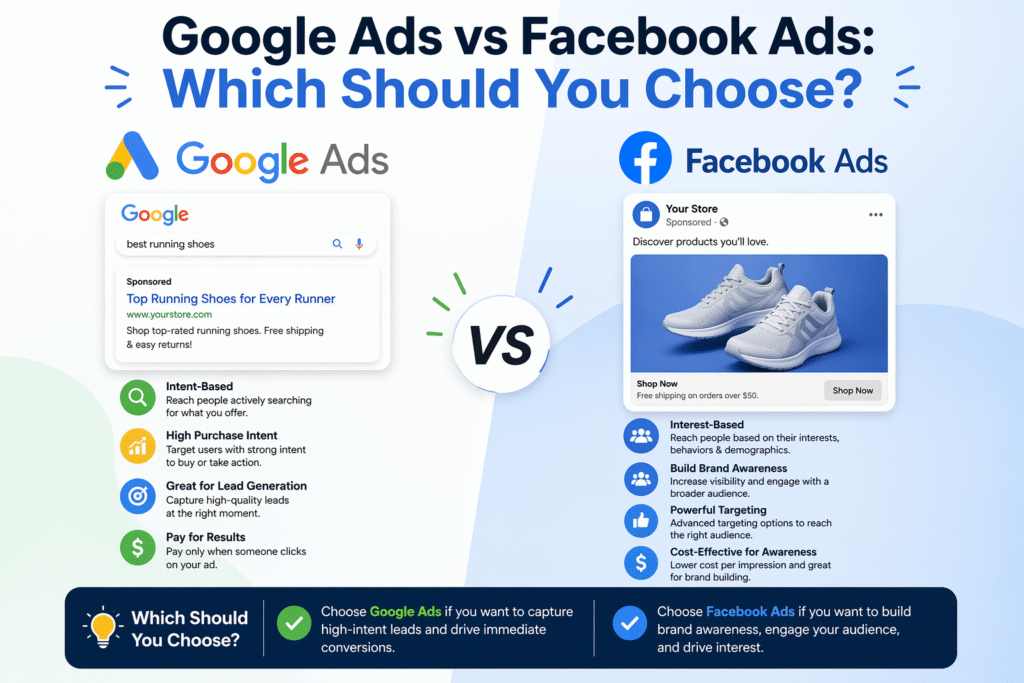
⚔️ Google Ads vs Facebook Ads (Quick Comparison)
| Factor | Google Ads | Facebook Ads |
|---|---|---|
| User Intent | High (searching) | Low (browsing) |
| Best For | Leads & sales | Brand awareness & engagement |
| Targeting | Keywords + search behavior | Interests, demographics, behavior |
| Ad Format | Search, display, shopping, video | Image, video, reels, carousel |
| Cost | Higher CPC | Lower CPC (usually) |
| Speed of Results | Fast conversions | Slower, builds over time |
🚀 When to Choose Google Ads
Choose Google Ads if you want:
- Instant leads or sales
- High-converting traffic
- To target people searching like:
“digital marketing agency in Surat”
👉 Why?
Because users already need your product/service, so conversion chances are higher.
✅ Best for:
- Service businesses
- Local businesses
- E-commerce with demand
- High-intent keywords
📲 When to Choose Facebook Ads
Choose Facebook Ads if you want:
- Brand awareness
- Audience engagement
- To promote visually (images/videos)
👉 Why?
Because users aren’t searching—you grab attention and create interest.
✅ Best for:
- New brands
- Fashion, lifestyle, products
- Content marketing
- Retargeting campaigns
💡 Real Strategy (What Experts Actually Do)
The smartest approach is:
👉 Use BOTH together
- Facebook Ads → Awareness (Top of funnel)
- Google Ads → Conversion (Bottom of funnel)
Example:
- Run Facebook Ads → people discover your brand
- Later they search on Google → click your Google Ad → convert
This combo gives the best ROI in most cases.
🧠 Final Verdict
- Want quick results & leads? → Go with Google Ads
- Want branding & audience growth? → Go with Facebook Ads
- Want maximum growth? → Use both strategically